Tel: 650-980-4870

Blog
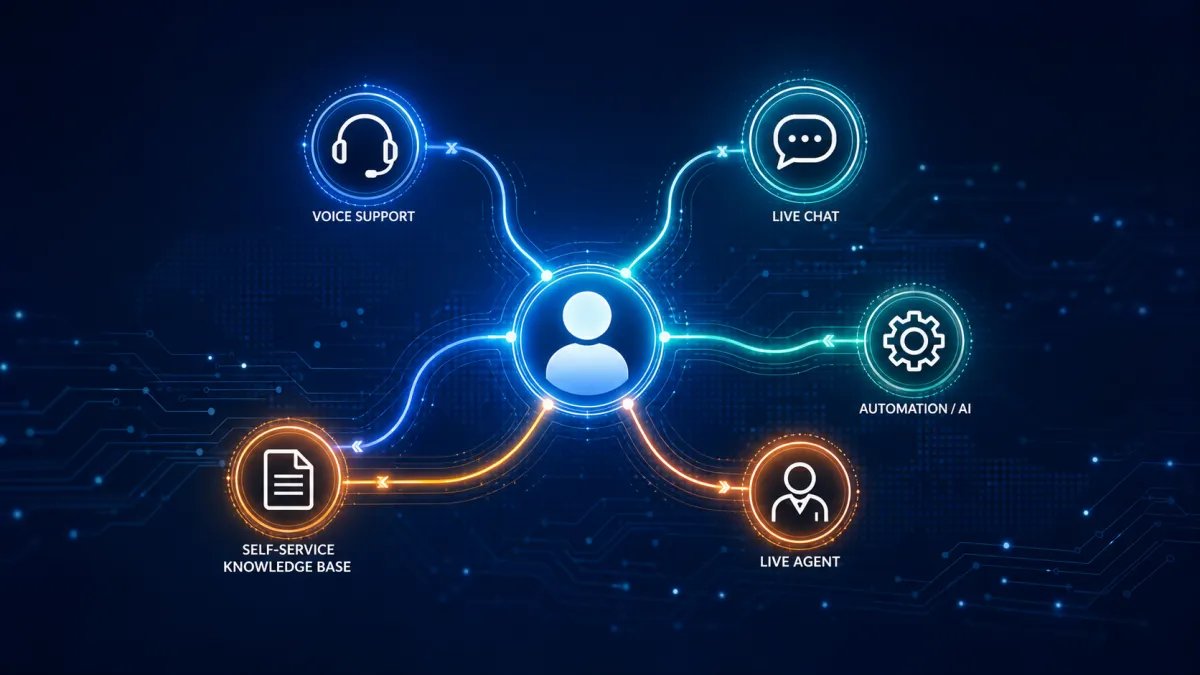
Multiple Paths to Resolution
Why the Best Contact Centers Don’t Rely on a Single Path to Resolution
In today’s contact center environment, rigid processes are the enemy of both efficiency and customer satisfaction. Customers don’t experience issues in a linear way, and expecting agents to resolve them through a single predefined path often leads to delays, escalations, and frustration.
High-performing contact centers recognize a fundamental truth: there are always multiple paths to resolve an issue—or achieve a desired outcome. The key is designing operations, technology, and agent workflows that embrace that flexibility without sacrificing control.
The Problem with Single-Path Resolution Models
Traditional contact center models are built around standardized scripts and linear workflows. While this approach ensures consistency, it creates several limitations:
It assumes every customer issue fits a predefined category
It restricts agent autonomy and critical thinking
It increases handle time when the “expected path” fails
It drives unnecessary transfers and escalations
In complex environments—especially in industries like healthcare, financial services, and telecom—customer issues often span multiple systems, departments, or policies. A single-path model simply can’t keep up.
What “Multiple Paths to Resolution” Really Means
Enabling multiple paths doesn’t mean chaos—it means structured flexibility. It’s about giving agents and systems the ability to dynamically determine the best route to resolution based on context.
This can include:
Channel flexibility: Resolving an issue across voice, chat, email, or self-service without restarting the journey
Workflow branching: Allowing agents to pivot based on real-time information instead of following rigid scripts
Cross-functional access: Enabling agents to resolve issues without excessive handoffs
Technology augmentation: Using AI and knowledge systems to suggest alternative solutions
For example, a billing issue might traditionally route through Tier 1 support, then escalate to billing, and finally to a supervisor. In a multi-path model, an agent equipped with the right tools could resolve the issue immediately—or trigger an automated workflow that bypasses unnecessary steps.
The Role of Technology in Enabling Flexibility
Modern contact center platforms—especially those integrated with UCaaS and CCaaS solutions—are critical in supporting multi-path resolution strategies.
Key capabilities include:
Intelligent routing: Matching customers to the best resource based on intent, history, and complexity
Unified agent desktops: Providing a single view of customer data across systems
Real-time decisioning: Leveraging AI to recommend next-best actions
Workflow automation: Orchestrating backend processes without manual intervention
When implemented correctly, these tools reduce friction and empower agents to focus on outcomes rather than process adherence.
Operational Benefits That Go Beyond CX
While improving customer experience is the obvious benefit, the operational impact is just as significant:
Reduced average handle time (AHT) through fewer dead-end paths
Lower transfer and escalation rates
Improved first contact resolution (FCR)
Increased agent satisfaction and retention
Greater scalability during peak demand periods
For BPO providers and enterprise contact centers alike, this translates directly into cost efficiency and stronger service-level performance.
Building a Multi-Path Resolution Strategy
Organizations looking to evolve should focus on three core areas:
Process design: Map multiple resolution paths for common issue types instead of enforcing a single workflow
Agent enablement: Train agents to think in terms of outcomes, not scripts
Technology alignment: Ensure platforms support flexibility rather than constrain it
A practical starting point is analyzing repeat contacts and escalations. These are often indicators that the current path to resolution is too narrow—or simply wrong.
Final Thought
The future of contact centers isn’t about tighter control—it’s about smarter flexibility. Customers expect fast, seamless resolutions, and agents need the ability to adapt in real time to deliver them.
Organizations that embrace multiple paths to resolution will not only improve customer experience but also unlock meaningful gains in efficiency, scalability, and agent performance.

Menu
Services
© Copyright 2023. Optimal Outcomes. All rights reserved.