Tel: 650-980-4870

Blog
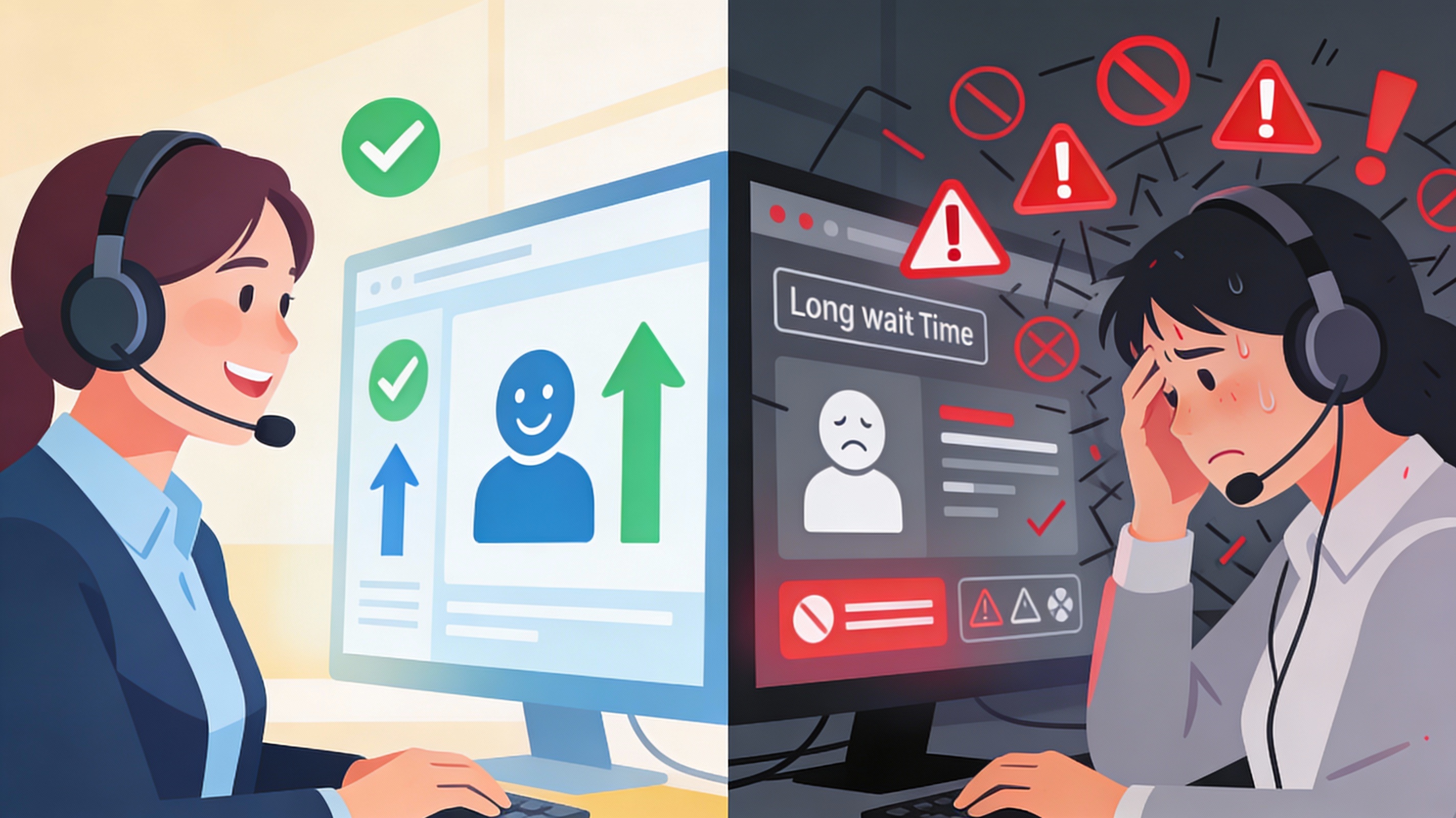
Metrics - The Good and Bad
Key performance indicators (KPIs) and metrics can be a contact center’s best friend or its worst enemy. Used thoughtfully, they align teams, improve customer experience, and reveal where to invest. Used poorly, they drive “check-the-box” behavior, burnout, and customer frustration.
What KPIs in a contact center are for
Contact center KPIs are quantifiable measures that show how well the operation is doing on customer experience, efficiency, cost, and employee performance. When chosen well, they connect the day-to-day of agents with the organization’s strategic goals.
Common categories include:
Customer experience: CSAT, NPS, Customer Effort Score, churn rate, contact quality.
Operational efficiency: Service level, average speed of answer, abandonment rate, time in queue, containment rate for self-service.
Agent performance: First Contact Resolution (FCR), Average Handle Time (AHT), after-call work, occupancy, adherence.
Financial/strategic: Cost per contact, conversion rate, average revenue per call, goal achievement.
When leaders make these metrics transparent and coach around them, they give agents a clear picture of “what good looks like” and where to improve.
The upside: how metrics help when done right
Well-designed KPIs create a positive feedback loop between customers, agents, and leadership. They make it easier to spot friction, test changes, and prove value.
Positive impacts include:
Better, faster resolution: FCR and CSAT together highlight whether customers get issues resolved in one interaction and feel good about it.
More efficient operations: AHT, service level, and abandonment rate show if staffing, training, and routing are working, enabling targeted fixes rather than blanket cost cuts.
Stronger coaching and training: Trends in quality scores, repeat contacts, and training-related KPI dips quickly flag knowledge or skill gaps, guiding coaching plans.
Higher agent engagement: Modern platforms with real-time dashboards, gamification, and self-managed scorecards help agents see progress and feel ownership of results.
Example: When a center tracks FCR (aiming for 70–80% or better), CSAT, and knowledge-base usage together, it can link training content to measurable improvements in “resolved on first contact” and customer happiness.
The downside: how “bad” metrics create bad behavior
The same metrics can backfire if they’re misaligned, outdated, or used punitively. Misused KPIs often optimize the metric, not the customer outcome.
Common failure patterns:
Over-focusing on speed: Aggressive AHT targets push agents to rush calls, transfer prematurely, or avoid complex issues, which can lower FCR and CSAT and increase repeat contacts.
Quantity over quality: Incenting on handle time and calls per hour without strong quality monitoring leads to inconsistent experiences, compliance risks, and higher churn.
Misaligned KPIs: When KPIs don’t match business strategy (for example, pushing volume reduction while the business wants deeper relationships), agents are evaluated on the wrong behaviors.
Data without context: Poor data quality or poorly integrated systems create flawed reports and misinformed decisions, which then drive the wrong coaching or investments.
Morale damage and turnover: If metrics are used mainly to “catch people doing things wrong,” agents feel undervalued, burn out faster, and leave, increasing costs and eroding service consistency.
Example: A center that rewards low AHT but ignores repeat contact reasons may see shorter calls on paper but higher call volumes, lower FCR, and more negative word-of-mouth as customer issues remain unresolved.
Designing KPIs for positive outcomes
The difference between helpful and harmful metrics usually comes down to design and governance. The same KPI can be productive if balanced with others and framed correctly.
Practical principles:
Align to strategy: Start from business goals (retain customers, grow revenue, reduce effort) and work backward to KPIs such as churn, FCR, CSAT, and cost per contact.
Balance quantity and quality: Pair AHT with FCR, CSAT, or quality scores so speed never wins at the expense of resolution or experience.
Review and refresh: Regularly assess whether KPIs are still relevant, especially as you add digital channels, bots, and self-service. Retire outdated metrics that no longer drive the right behaviors.
Make data actionable: Use real-time dashboards, clear scorecards, and targeted coaching so metrics become a tool for improvement instead of just inspection.
Involve agents: Engage frontline staff in defining what’s realistic and meaningful; they can surface how certain targets unintentionally encourage gaming or stress.
One effective pattern is to define a small “north star” set—for example: FCR, CSAT or NPS, service level, and cost per contact—and then use diagnostic metrics (AHT, transfer rate, time in queue, abandonment, quality scores) to explain changes rather than becoming goals by themselves.
Using metrics to tell a better story
Ultimately, KPIs and metrics are a way to tell the story of your contact center in numbers: how customers feel, how agents work, and how the operation supports the business. The story becomes more powerful—and less risky—when metrics are tightly aligned to strategy, balanced across speed and quality, and used to coach and improve rather than punish.
If you like, I can adapt this into a more formal blog format with a title, intro hook, and subheads tailored to a specific audience segment (CX leaders, CFOs, or operations managers).

Menu
Services
© Copyright 2023. Optimal Outcomes. All rights reserved.