Tel: 650-980-4870

Blog
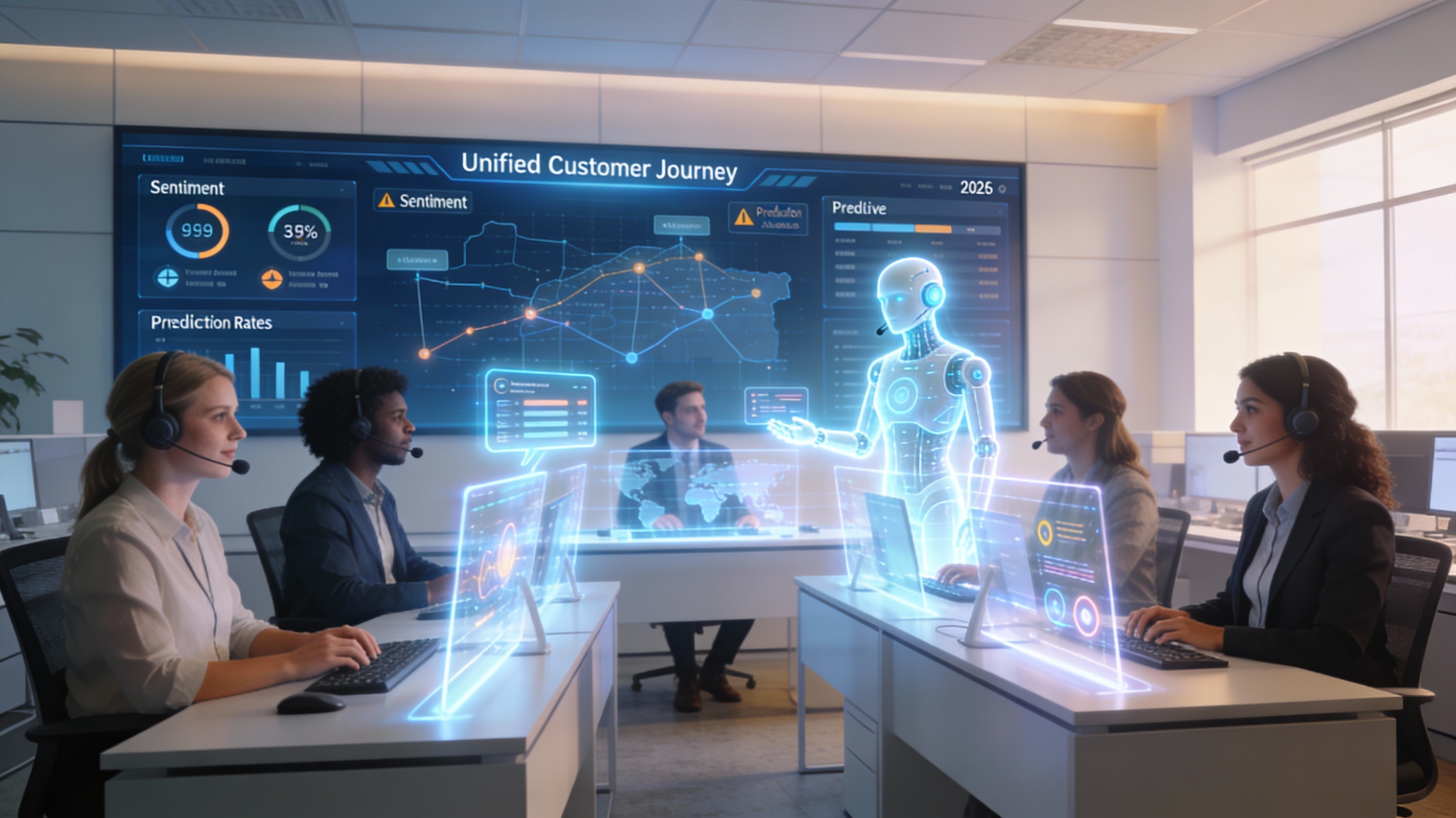
The Future is Here
The Future Is Now: How AI and Automation Will Redefine Contact Centers in 2026
As 2026 dawns, the contact center industry is crossing a major inflection point. Artificial intelligence and automation—once viewed as supporting tools—are becoming the backbone of how modern brands communicate, personalize, and scale customer engagement. The contact center is transforming from a reactive cost center to a proactive intelligence engine, designed to predict needs, optimize interactions, and enhance experiences in real time.
The key change ahead isn’t just technological—it’s philosophical. For decades, contact centers chased efficiency: faster handle times, streamlined scripts, fewer agents. Today, leaders are pursuing intelligence, adaptability, and empathy at scale.
From Efficiency to Intelligence
AI advancements have made automation smarter, more contextual, and more strategic. In 2026, the most successful contact centers will move beyond tactical automation and toward AI-driven ecosystems that understand intent and context before a human even gets involved.
Here’s what we can expect:
Predictive engagement– Instead of waiting for customers to reach out, intelligent systems will identify potential friction points before they escalate. For example, AI may detect a billing anomaly or delayed shipment and prompt a proactive notification or outreach—turning potential frustration into trust.
Autonomous workflows– Next-generation virtual agents will no longer just answer FAQs. They’ll process refunds, reschedule deliveries, reset credentials, and manage complex transactions end-to-end within connected CRMs or ERP systems.
Adaptive quality management– Quality assurance will become continuous and data-driven. GenAI-powered analytics can now assess sentiment, compliance, and conversational empathy across 100% of interactions, surfacing insights in real time to supervisors and training teams.
Continuous learning loops– AI will not only process data but learn from it—meaning every interaction helps improve the next. Over time, virtual and human agents will both evolve based on outcome-based insights rather than static scripts.
Taken together, these shifts represent a move toward what some analysts call the autonomous contact center: an ecosystem where AI doesn’t just assist support teams but orchestrates and optimizes the entire customer journey.
The Age of Personalized Automation
Automation used to mean standardization—predictable processes applied to everyone the same way. But in 2026, the most impactful innovation will come from personalized automation.
Generative AI tools will craft individual, context-rich interactions using customer history, preferences, and tone. That’s the difference between a chatbot offering a generic return label versus one that says,“I see this is the third time your size has been unavailable—would you like me to alert you when it's back in stock?”
Emotionally intelligent AI—trained on linguistic cues and sentiment modeling—will recognize frustration or relief in a customer’s voice and respond accordingly. It will also adapt messages by channel: concise empathy over chat, conversational reassurance over voice, or predictive suggestions via SMS or email.
This deep personalization doesn’t just enhance customer satisfaction—it creates emotional continuity. Every interaction feels connected and intentional, which strengthens trust in the brand over time.
Reframing the Role of the Human Agent
Contrary to the fear that AI will replace human jobs, 2026 will instead mark the rise of a new class of “digitally skilled” contact center professionals. These individuals will leverage AI-driven insights in real time to deliver exceptional service when human judgment, empathy, or authority are needed most.
AI co-pilots will analyze live interactions and surface suggestions like“this customer may be upset due to wait times—apologize briefly and offer reassurance before proceeding.”They’ll also summarize calls, update CRM records, and propose next-best actions instantly, allowing agents to focus entirely on the customer.
The most forward-thinking organizations will redesign workforce models around human-AI collaboration—where automation reduces cognitive load, and people bring the creativity, empathy, and problem-solving that no machine can replicate.
A New Era of Metrics and Mindsets
These changes will fundamentally alter how success is measured. Traditional metrics like average handle time and first-contact resolution, while still important, will give way to new KPIs such as:
Predictive resolution rates (issues resolved before escalation)
Sentiment accuracy (how often AI identifies emotional tone correctly)
Experience continuity (consistency across channels and touchpoints)
Employee engagement (AI relieving burnout and supporting skill growth)
Customer experience will become as much about anticipation as resolution. The smartest contact centers will resemble living systems—constantly learning, adapting, and optimizing around each customer’s journey.
Looking Ahead
As we progress through 2026 and beyond, contact center leaders will find themselves balancing two imperatives: operational efficiency and human authenticity. The future belongs to organizations that can blend both seamlessly—using AI not to remove human touch, but to scale it intelligently.
Automation and artificial intelligence will continue to evolve, but the goal remains the same: to deliver experiences that feel effortless and personal at once. The contact center of tomorrow won’t just answer questions—it will understand customers, anticipate needs, and strengthen relationships before the first word is spoken.

Menu
Services
© Copyright 2023. Optimal Outcomes. All rights reserved.