Tel: 650-980-4870

Blog
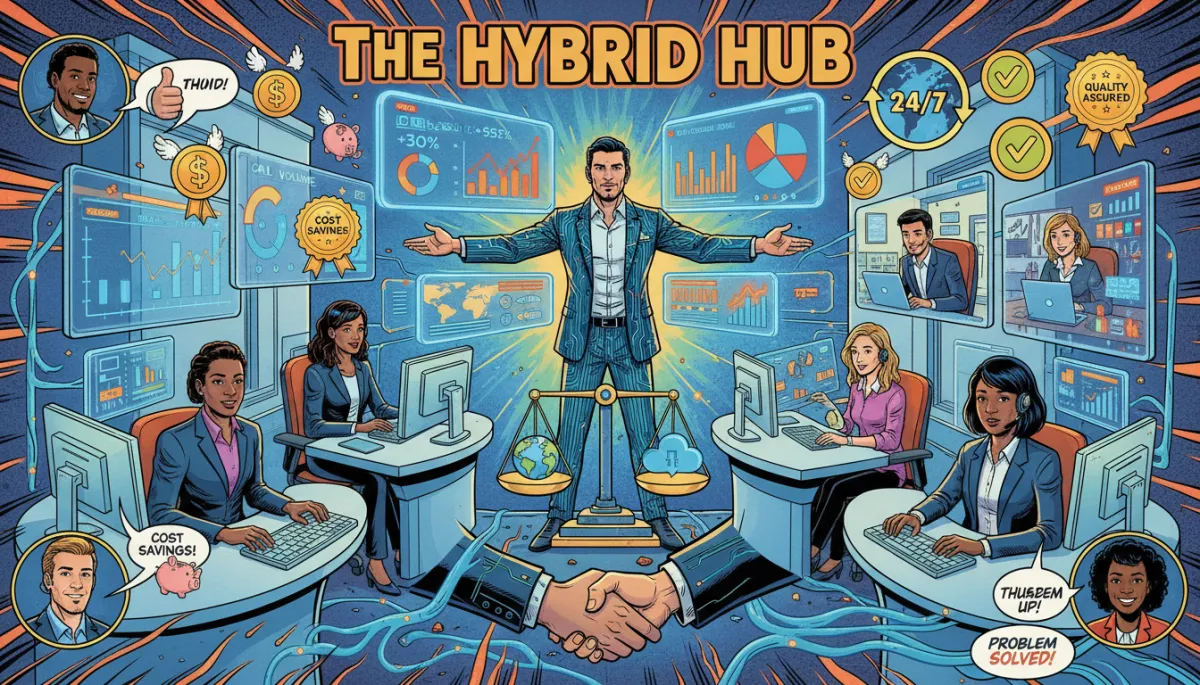
Quality & Analytics: A Hybrid Approach
In-House Contact Center QA & Analytics Pitfalls:
Resource & Expertise Limitations
Difficult to maintain expertise across voice, chat, email, social media channels
High turnover in QA roles leads to inconsistent evaluation standards
Limited capacity to evaluate adequate sample sizes (often <1-2% of interactions)
Struggle to keep pace with evolving AI/speech analytics technologies
QA teams sized for average volume, overwhelmed during spikes
Bias & Subjectivity Issues
Evaluators develop personal relationships with agents, affecting objectivity
"Halo effect" - recent performance colors overall scoring
Inconsistent calibration across multiple QA analysts
Reluctance to challenge supervisors or popular agents
Internal politics influence which interactions get reviewed
Operational Constraints
QA staff pulled into coaching, training, or floor support during staffing shortages
Focus on compliance/scoring over actionable insights
Delayed feedback loops - evaluations weeks behind actual interactions
Limited time for root cause analysis or trend identification
Reactive rather than predictive analytics
Technology Gaps
Legacy quality management systems with limited analytics capabilities
Inability to analyze 100% of interactions (speech/text analytics too expensive)
Siloed data - CRM, WFM, QM systems don't integrate well
Manual scorecards and spreadsheet-based reporting
Lack of real-time monitoring and alerting
Narrow Perspective
"This is how we've always done it" mentality
Benchmarking limited to internal historical data
Miss industry best practices and emerging trends
Difficulty identifying systemic issues vs. agent-specific problems
Outsourced Contact Center QA & Analytics Pitfalls:
Context & Domain Knowledge Loss
External QA teams lack understanding of product complexity and customer pain points
Don't grasp nuances of brand voice and customer experience standards
Miss context from previous customer interactions or account history
Unfamiliar with internal systems, policies, and escalation procedures
Struggle to evaluate "soft skills" without cultural understanding
Quality & Consistency Concerns
Offshore evaluators may have language/accent comprehension challenges
High turnover at vendor creates constant retraining needs
"Checkbox mentality" - focus on scorecard compliance over quality insights
Difficult to maintain calibration between vendor and internal standards
Variable quality across different vendor team members
Communication & Responsiveness
Time zone differences delay issue resolution and feedback
Slower turnaround on ad-hoc analysis requests
Difficulty scheduling calibration sessions and alignment meetings
Vendor account managers change, requiring relationship rebuilding
Language barriers in explaining complex findings
Data Security & Compliance Risks
Sharing customer PII and sensitive call recordings with third parties
Compliance with GDPR, HIPAA, PCI-DSS when data leaves organization
Vendor data breach exposes your customer information
Limited visibility into vendor's data handling practices
Contractual liability if vendor causes compliance violation
Integration & Actionability Challenges
Vendor reports don't integrate with internal dashboards and workflows
Insights delivered in static reports rather than actionable formats
Disconnect between QA findings and coaching/training execution
Supervisors don't trust or act on "outsider" evaluations
Difficult to close the loop on improvement initiatives
Cost & Contract Issues
Per-evaluation pricing makes 100% monitoring cost-prohibitive
Scope changes require contract amendments and negotiations
Minimum volume commitments during slow periods
Hidden costs for custom reporting, calibration sessions, platform access
Vendor lock-in with proprietary scoring methodologies
Strategic Limitations
Vendors focus on tactical evaluation, not strategic insights
Limited investment in understanding your business objectives
Cookie-cutter approaches applied across multiple clients
Difficulty pivoting quickly when business priorities change
Vendor priorities may not align with your innovation goals
Contact Center-Specific Hybrid Considerations:
Best Practices for Balanced Approach:
Keep In-House:
Core QA team for calibration, standards-setting, and escalations
Real-time monitoring and coaching for critical interactions
Analytics strategy and insight interpretation
Integration with training, coaching, and performance management
Sensitive customer segments (VIP, legal, high-risk)
Consider Outsourcing:
High-volume routine transaction evaluation
After-hours/weekend monitoring coverage
Specialized analytics (sentiment analysis, speech analytics)
Benchmarking studies and industry comparisons
Overflow capacity during seasonal peaks
Multi-language evaluation capabilities
Critical Success Factors:
Robust calibration process between internal and external teams
Clear SLAs for turnaround time and quality standards
Integrated technology platforms for seamless data flow
Regular business reviews to ensure alignment
Gradual transition with knowledge transfer protocols
Maintain internal expertise to manage and validate vendor work
The contact center environment's complexity—multiple channels, high volumes, regulatory requirements, and direct customer impact—makes the in-house vs. outsourced decision particularly nuanced. Most successful operations use a strategic hybrid model that leverages external scale and expertise while maintaining internal control over quality standards and strategic direction.

Menu
Services
© Copyright 2023. Optimal Outcomes. All rights reserved.