Tel: 650-980-4870

Blog
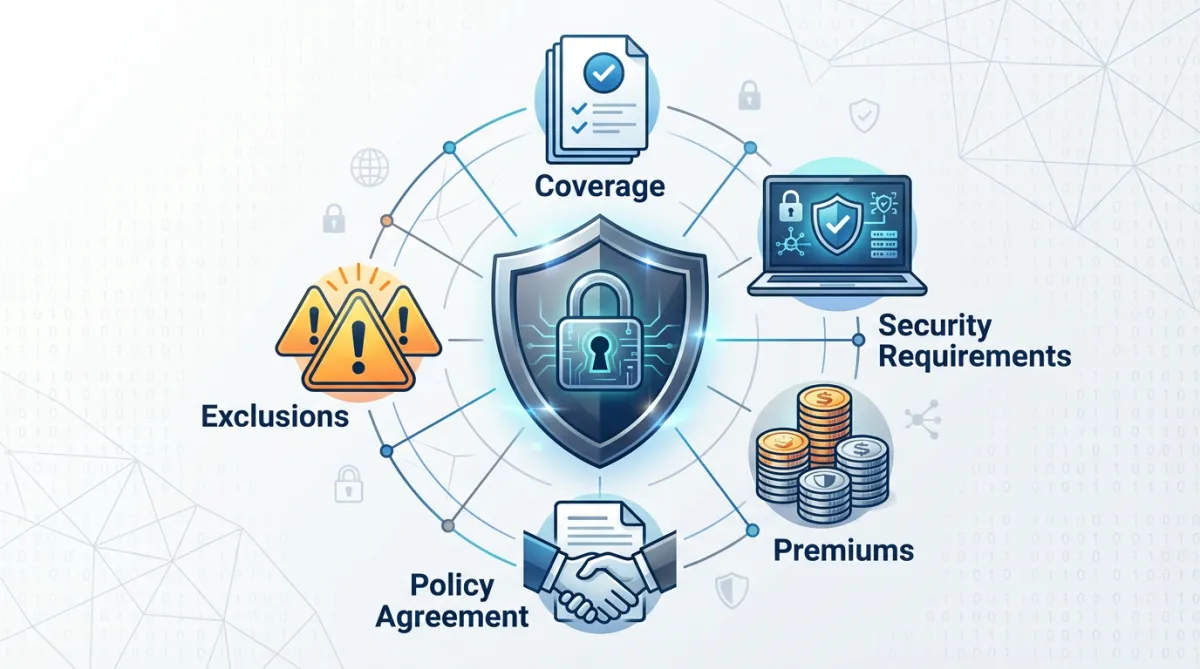
Cyber Insurance
Coverage Scope
First-party vs. third-party coverage - First-party covers direct losses (data recovery, business interruption, ransomware payments), while third-party covers liability claims from affected customers or partners
Exclusions - Many policies exclude nation-state attacks, acts of war, unpatched systems, or losses from known vulnerabilities
Ransomware payment coverage - Not all policies cover ransom payments, and some require pre-approval
Requirements & Obligations
Security controls - Insurers increasingly require MFA, endpoint detection, regular backups, patch management, and security training before issuing policies
Pre-breach obligations - Companies must maintain specific security standards or risk claim denial
Notification requirements - Strict timelines for reporting incidents to the insurer
Financial Considerations
Rising premiums - Cyber insurance costs have increased significantly due to rising claims
Deductibles and sub-limits - High deductibles and caps on specific coverage types (e.g., business interruption)
Retroactive date - Claims-made policies only cover incidents discovered during the policy period
Application Process
Detailed questionnaires - Insurers conduct thorough assessments of security posture
Misrepresentation risks - Inaccurate information can void coverage
Underwriting scrutiny - High-risk industries face more stringent requirements
Policy Management
Claims process complexity - Cyber claims require extensive documentation and forensic investigation
Insurer-approved vendors - Many policies require using specific incident response firms
Policy evolution - Coverage terms change rapidly as threats evolve
Companies should work with experienced brokers and legal counsel to ensure adequate protection aligned with their specific risk profile.

Menu
Services
© Copyright 2023. Optimal Outcomes. All rights reserved.