Tel: 650-980-4870
Blog
Revenue Levers
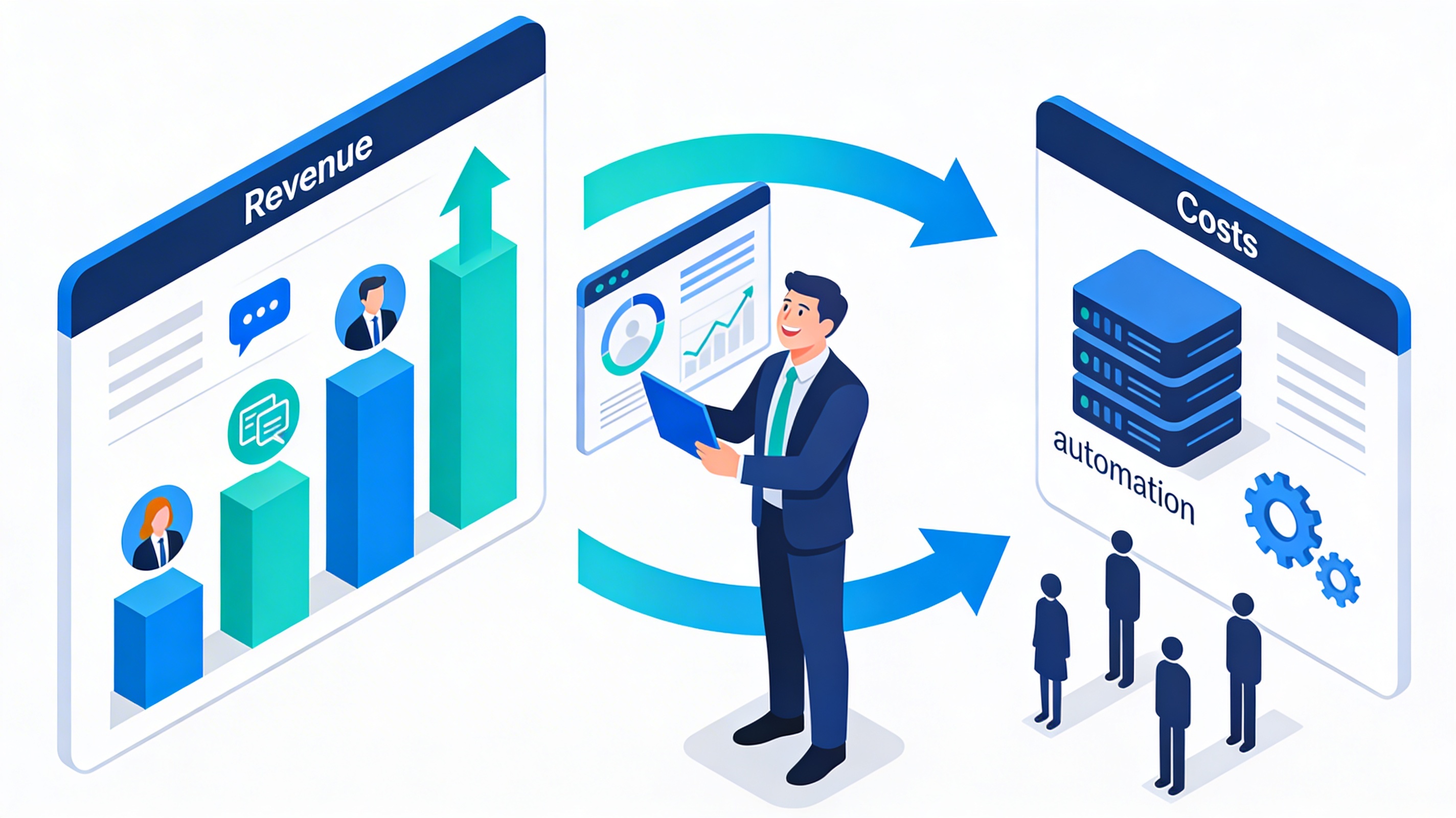
Managed services and modern software increase revenue in two ways at once: they help you sell more and they help you spend less to do it.
The Two Revenue Levers
Top-line growth: Higher productivity per seller, faster cycles, better conversion, and higher customer lifetime value.
Bottom-line savings: Lower IT and operations spend, fewer manual tasks, less downtime, and the option to grow without adding proportional headcount.
Think of it as compounding ROI: if you improve win rates and deal velocity while simultaneously shrinking cost per dollar of revenue, the financial impact multiplies.
How Managed Services Help You Make More
Managed services free your internal teams from low-value work so they can focus on revenue-driving activities.
More time on customers: Offloading infrastructure, monitoring, updates, and troubleshooting means sales, service, and product teams spend more hours with customers instead of firefighting tech issues.
Faster response and delivery: 24/7 monitoring and standardized processes reduce downtime and defects, which improves customer experience and speeds up fulfillment, renewals, and upsells.
Strategic focus: When a big share of IT budget tied up in maintenance gets freed, those dollars can move into new products, better CX, and go‑to‑market innovation.
How Managed Services Help You Save
Well-run managed services materially reduce IT and operations costs while improving resilience and performance.
Lower IT run costs: You shift from large capital spends and ad‑hoc fixes to predictable operating expense and shared expertise.
Less downtime and waste: Proactive monitoring reduces outages and idle resources, turning lost productivity into usable capacity.
Leaner headcount: Instead of hiring multiple in‑house specialists, you tap an external team’s economies of scale and only pay for what you need.
Predictable spend: Fixed monthly pricing and standardized services improve budgeting and reduce “surprise” emergency costs.
How Revenue-Focused Software Lifts Sales
Revenue tech and automation software directly raise sales capacity and effectiveness per person.
More selling time: Sales automation cuts admin, reporting, and manual follow‑up, unlocking more customer‑facing time.
Higher conversion: Automated lead capture, scoring, and nurturing ensure the right rep works the right opportunity at the right time.
Shorter cycles: Automating proposals, approvals, and contracts shrinks cycle times and pulls revenue forward.
Scalable coverage: Each rep can handle more accounts and opportunities when repetitive communication and task management are automated.
How Software And Services Cut Cost To Serve
The same tools that drive growth often reduce the cost to acquire and support each customer.
Fewer manual touches: Every automated handoff, notification, or data update replaces labor with low‑cost, always‑on software.
Standardized processes: Automation enforces consistent best practices, reducing rework, errors, and exceptions that drain margin.
Scale without matching headcount: With automation and managed services in place, you can handle more tickets, orders, and deals without hiring in the same ratio.
Financial Impact Summary
In practice, the most powerful strategy is to treat managed services and automation software as a single revenue system: outsource and automate everything non‑core, then reinvest the freed money and time into activities that win, grow, and retain customers at a lower cost per dollar of revenue.

Menu
Services
© Copyright 2023. Optimal Outcomes. All rights reserved.